Tag: #LegalView

  • Permissibility of Introducing Late-Stage Documentary Evidence in Criminal Proceedings

    Permissibility of Introducing Late-Stage Documentary Evidence in Criminal Proceedings

    Date: 14.08.2026

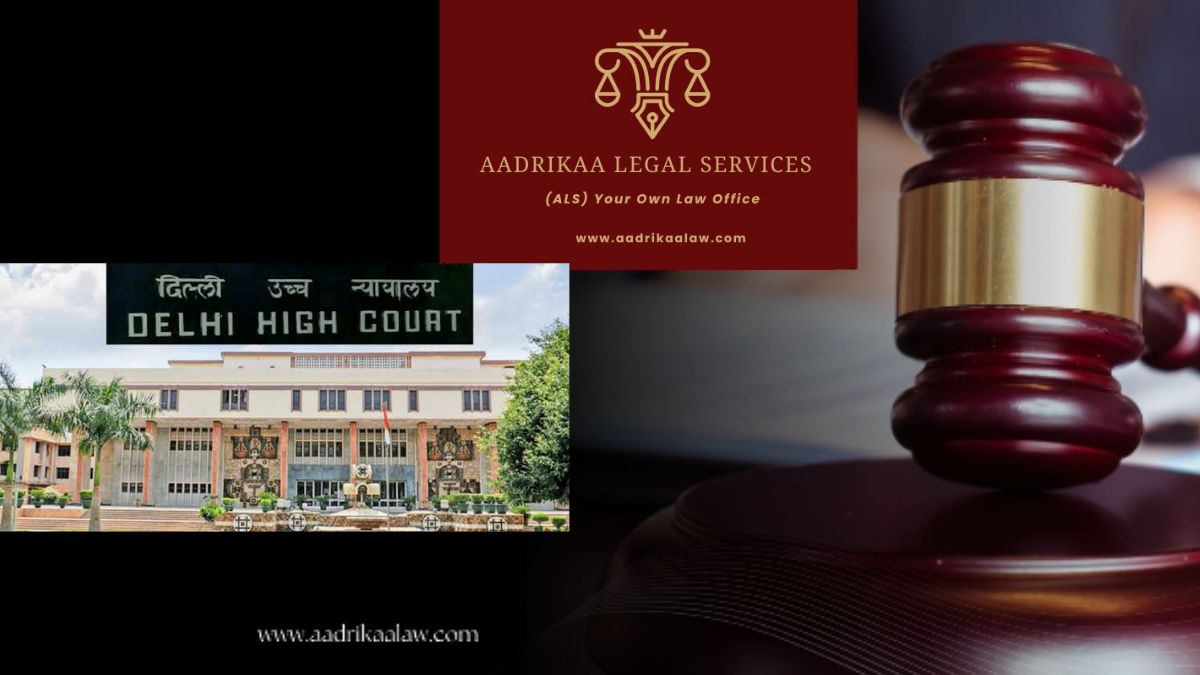
    A recent judgment by the Delhi High Court has provided significant clarity on the admissibility of late-stage documentary evidence in criminal proceedings, particularly in cases involving promissory notes and alleged cheque dishonour under Section 138 of the Negotiable Instruments Act, 1881 (NI Act). The case, SRS Infratech Pvt Ltd & Anr. vs. Kumud Chaudhary & Ors., addresses the scope of Section 311 of the Code of Criminal Procedure, 1973 (CrPC), and the rights of parties to introduce and challenge evidence during trial.

    Case Background

    The dispute originated from a complaint by Late Shyam Chaudhary, who alleged that SRS Infratech Pvt Ltd had availed a loan of Rs. 25 lakhs, supported by a loan agreement and a promissory note dated 16.11.2009. After the complainant’s death, his legal representatives continued the proceedings. The petitioners (SRS Infratech and its representative) denied the loan transaction, claiming the cheque was issued as security for a property deal that never materialized.

    Key Legal Issues

    1. Introduction of New Evidence:
      • During the defence stage, the respondents sought to introduce a promissory note that had not been previously placed on record, claiming it was discovered after the complainant’s death.
      • The trial court allowed the recall of a witness (Ms. Kavita Chowdhary) under Section 311 CrPC to introduce the promissory note.
    2. Petitioners’ Objections:
      • The petitioners argued that introducing the promissory note at a late stage was impermissible, especially after the defence had been disclosed.
      • They contended that the application was an attempt to fill gaps in the respondents’ case and amounted to a review of an earlier withdrawn application, which is barred by Section 362 CrPC.
      • They also argued that the document’s genuineness was disputed, and thus it could not be admitted without formal proof under Section 294(3) CrPC.

    Court’s Analysis and Findings

    1. Scope of Section 311 CrPC

    The Court emphasized that Section 311 CrPC grants wide powers to recall or summon witnesses at any stage if their evidence is essential for a just decision. The provision is not limited by the stage of proceedings, provided the evidence is germane to the controversy and the opposing party is given a fair opportunity to rebut.

    2. Chronology and Bona Fides

    The promissory note was not introduced for the first time at the late stage; it had been sought to be placed on record earlier via an affidavit in 2020. The subsequent application aimed to recall a witness to formally introduce the document, not to fundamentally alter the case.

    3. No Absolute Bar on Late Evidence

    The Court clarified that delay alone does not bar the introduction of relevant evidence. The key consideration is whether the evidence is connected to the dispute and whether the opposing party can challenge it through cross-examination.

    4. Section 294(3) CrPC and Disputed Documents

    Section 294(3) CrPC only dispenses with formal proof if a document’s genuineness is admitted. If disputed, the party relying on the document must prove its authenticity through standard legal procedures. The marking of the promissory note as an exhibit does not establish its genuineness or admissibility.

    5. No Review under Section 362 CrPC

    The earlier application to introduce the promissory note was withdrawn, not adjudicated on merits. Thus, the subsequent application did not amount to a prohibited review.

    6. Safeguards Against Prejudice

    The petitioners retain the right to cross-examine the witness and challenge the document’s authenticity, ensuring no unfair prejudice.

    Conclusion and Implications

    The Delhi High Court dismissed the petition, allowing the promissory note to be brought on record, subject to proof and cross-examination. The judgment underscores:

    • The broad discretion courts have under Section 311 CrPC to ensure all relevant evidence is considered.
    • The importance of procedural fairnessβ€”late evidence can be admitted if the opposing party is not deprived of the opportunity to challenge it.
    • The distinction between admitting a document for evidence and accepting its genuineness or evidentiary value.

    This decision serves as a guiding precedent for similar disputes, balancing the need for comprehensive adjudication with the rights of both parties to a fair trial.

    Aadrikaa Legal Services is a trusted legal and regulatory support partner providing end-to-end legal solutions to law firms, corporate organizations, and businesses across India. We specialize in paralegal services, litigation support, tax and regulatory matters, delivering reliable, efficient, and result-oriented legal assistance.

    Our services include comprehensive paralegal support, drafting and documentation, legal research, case management, litigation handling, and representation support across various judicial and quasi-judicial forums. We also assist in direct and indirect tax matters, customs, GST, corporate regulatory compliance, and legal advisory.

    Handy Download:

  • Delhi High Court on Territorial Jurisdiction and Framing of Charges in Alleged Rice Export Fraud

    Delhi High Court on Territorial Jurisdiction and Framing of Charges in Alleged Rice Export Fraud

    Date: 13.08.2026

    The Delhi High Court recently delivered a significant judgment in the case involving Vishal Exports Overseas Ltd. and the Central Bureau of Investigation (CBI), addressing complex issues of territorial jurisdiction and alleged financial fraud in the export of rice. This article provides a comprehensive overview of the case background, legal arguments, court findings, and the broader implications for export-related criminal proceedings in India.

    Case Background

    1. Government Policy and Export Agreement
      • The case originated from a government policy permitting the export of wheat and rice procured from the Food Corporation of India (FCI) through nominated agencies.
      • Punjab State Warehousing Corporation (PSWC) selected Vishal Exports Overseas Ltd. as an associate for exporting 5,500 MT of rice, with agreements and transactions centered in Punjab.
      • Rice was to be exported via Kandla Port, Gujarat, with supporting documents submitted to customs and banking authorities.
    2. Allegations of Fraud and Forgery
      • While most of the rice was exported as per records, allegations arose that documents for 1,167 MT of rice were forged and that this quantity was diverted to the domestic market instead of being exported.
      • The CBI initiated a preliminary enquiry in 2005, followed by an FIR in 2006, naming company officials and unknown FCI officials as accused.
    3. Legal Proceedings Timeline
      • Charge-sheet filed in 2007; subsequent supplementary charge-sheet in 2009 included the company as an accused.
      • Multiple rounds of litigation ensued, including applications for discharge, revision petitions, and challenges to the framing of charges.

    Key Legal Issues

    Territorial Jurisdiction

    • Petitioners’ Argument:
      • The entire transaction occurred in Punjab and Gujarat, not Delhi. Thus, Delhi courts lacked territorial jurisdiction.
      • Objections to jurisdiction were raised at various stages, including during arguments on charge and in discharge applications.
      • Cited several precedents emphasizing that mere filing of a charge-sheet in Delhi does not confer jurisdiction.
    • CBI’s Argument:
      • The objection was raised belatedly, after significant progress in the trial (over 15 years).
      • Section 508 of the Bharatiya Nagarik Suraksha Sanhita (BNSS), corresponding to Section 462 Cr.P.C., requires proof of a failure of justice due to lack of jurisdiction, which was not demonstrated.
      • More than half of the prosecution witnesses had already been examined, and a de novo trial would be against the interest of justice.

    Court’s Analysis and Findings

    1. Application of Section 508 BNSS
      • The court emphasized that proceedings are not to be set aside merely for being conducted in the wrong local area unless a failure of justice is shown.
      • The petitioners failed to demonstrate any prejudice or failure of justice due to the trial being conducted in Delhi.
    2. Stage of Proceedings
      • With the trial at an advanced stage and most witnesses examined, returning the case would result in unnecessary delay and repetition.
      • The court distinguished the present case from precedents cited by the petitioners, noting those involved objections raised at much earlier stages.
    3. No Infirmity in Lower Court Orders
      • The High Court found no reason to interfere with the orders of the lower courts, as the statutory requirements for setting aside proceedings on jurisdictional grounds were not met.

    Conclusion and Implications

    • The Delhi High Court dismissed the petition, upholding the continuation of proceedings in Delhi.
    • The judgment underscores the importance of raising jurisdictional objections at the earliest and demonstrating actual prejudice for relief.
    • It also highlights the court’s reluctance to disrupt advanced criminal trials on technical grounds, especially when no failure of justice is evident.

    Key Takeaways for Exporters and Legal Practitioners

    1. Early Objection is Crucial: Jurisdictional challenges must be raised promptly and substantiated with evidence of prejudice.
    2. Substance Over Technicality: Courts prioritize substantive justice over procedural technicalities, especially in protracted trials.
    3. Documentary Integrity: Exporters must ensure the authenticity of all export-related documents to avoid criminal liability.

    This case serves as a precedent for handling jurisdictional disputes in complex financial and export fraud cases, reinforcing the need for diligence and timely legal strategy.

    Aadrikaa Legal Services is a trusted legal and regulatory support partner providing end-to-end legal solutions to law firms, corporate organizations, and businesses across India. We specialize in paralegal services, litigation support, tax and regulatory matters, delivering reliable, efficient, and result-oriented legal assistance.

    Our services include comprehensive paralegal support, drafting and documentation, legal research, case management, litigation handling, and representation support across various judicial and quasi-judicial forums. We also assist in direct and indirect tax matters, customs, GST, corporate regulatory compliance, and legal advisory.

    Handy Download:

  • Supreme Court Strikes Down West Bengal Housing Industry Regulation Act, 2017: Repugnancy with RERA and the Primacy of Central Real Estate Regulation

    Supreme Court Strikes Down West Bengal Housing Industry Regulation Act, 2017: Repugnancy with RERA and the Primacy of Central Real Estate Regulation

    Date: 13.08.2026

    The Supreme Court of India, in a landmark judgment, declared the West Bengal Housing Industry Regulation Act, 2017 (WB-HIRA) unconstitutional due to its repugnancy with the central Real Estate (Regulation and Development) Act, 2016 (RERA). This article provides a detailed analysis of the case, the legislative background, the core legal issues, and the implications for real estate regulation in India.

    Background: The Challenge to WB-HIRA

    The Forum for People’s Collective Efforts (FPCE) challenged the constitutional validity of WB-HIRA, arguing that:

    1. Both WB-HIRA and RERA fall under the Concurrent List (Entries 6 and 7) of the Constitution.
    2. WB-HIRA did not receive Presidential assent as required under Article 254(2).
    3. WB-HIRA contains provisions inconsistent with RERA or is a virtual replica of it.
    4. Parliament, having legislated on the subject, precludes the State from enacting parallel legislation.

    Legislative History: From State Laws to a National Framework

    Before RERA, several states, including West Bengal, had their own real estate laws. Notably:

    • West Bengal enacted the WB 1993 Act, which received Presidential assent.
    • Maharashtra and Kerala also had their own acts, later repealed after RERA’s enactment.
    • RERA was introduced to address the lack of consumer protection, transparency, and standardization in the real estate sector.

    RERA: Salient Features

    RERA was designed as a comprehensive, uniform framework for real estate regulation across India. Key features include:

    1. Mandatory Registration: All real estate projects and agents must register with the regulatory authority before advertising or selling.
    2. Transparency: Promoters must disclose project details, approvals, and progress on a public website.
    3. Consumer Protection: Limits on advance payments, model agreements, and clear refund/compensation mechanisms.
    4. Dispute Resolution: Establishment of Real Estate Regulatory Authorities and Appellate Tribunals for speedy redressal.
    5. Overriding Effect: RERA explicitly states its provisions override any inconsistent state laws (Section 89).

    WB-HIRA: Overlap and Variance with RERA

    While WB-HIRA closely mirrored RERA, several key differences and inconsistencies were identified:

    • Definitions: WB-HIRA’s definitions of ‘car parking area’, ‘garage’, and ‘force majeure’ differed from RERA, often to the detriment of homebuyers.
    • Scope: WB-HIRA applied to all projects in West Bengal, not just those in planning areas.
    • Regulatory Powers: WB-HIRA lacked certain consumer safeguards present in RERA, such as the power to refer monopoly issues to the Competition Commission of India.
    • Advisory Councils: WB-HIRA established a State Advisory Council, whereas RERA provided for a Central Advisory Council.
    • Compounding of Offences: RERA allowed for compounding; WB-HIRA did not.
    • Adjudication: RERA required a judicial officer for compensation claims; WB-HIRA vested this in the regulatory authority.

    The Supreme Court’s Analysis

    1. Legislative Competence

    • Both RERA and WB-HIRA fall under the Concurrent List (Entries 6 and 7: transfer of property and contracts).
    • The State’s initial claim that WB-HIRA was an ‘industry’ law under the State List was abandoned during arguments.

    2. Repugnancy under Article 254

    • The Court applied three tests for repugnancy:
      1. Direct conflict between provisions.
      2. Parliament’s intent to occupy the entire field.
      3. Both laws covering the same subject matter.
    • WB-HIRA was found to be repugnant on all counts: it was a near-verbatim copy of RERA, with some provisions directly conflicting or omitting key consumer protections.

    3. Presidential Assent

    • WB-HIRA did not receive Presidential assent, a requirement for state laws repugnant to central laws in the Concurrent List.

    4. Sections 88 and 89 of RERA

    • Section 88 (“in addition to and not in derogation of”) does not permit parallel state regimes on the same subject.
    • Section 89 gives RERA overriding effect over inconsistent state laws.

    The Verdict and Its Implications

    • WB-HIRA Struck Down: The Supreme Court declared WB-HIRA unconstitutional and void due to repugnancy with RERA.
    • No Revival of Old State Law: The earlier WB 1993 Act, already repealed, does not revive as a result of this judgment.
    • Protection of Past Actions: Registrations, sanctions, and permissions granted under WB-HIRA before the judgment remain valid (by virtue of Article 142 powers).
    • Uniformity Restored: RERA now applies uniformly across West Bengal, ensuring consistent consumer protection and regulatory standards.

    Conclusion

    The Supreme Court’s decision in FPCE v. State of West Bengal reinforces the primacy of central legislation in the real estate sector and ensures that homebuyers across India are protected by a uniform regulatory framework. States cannot enact parallel laws that duplicate or dilute central protections without Presidential assent. This judgment is a significant step towards transparency, accountability, and consumer rights in Indian real estate.

    Aadrikaa Legal Services is a trusted legal and regulatory support partner providing end-to-end legal solutions to law firms, corporate organizations, and businesses across India. We specialize in paralegal services, litigation support, tax and regulatory matters, delivering reliable, efficient, and result-oriented legal assistance.

    Our services include comprehensive paralegal support, drafting and documentation, legal research, case management, litigation handling, and representation support across various judicial and quasi-judicial forums. We also assist in direct and indirect tax matters, customs, GST, corporate regulatory compliance, and legal advisory.

    Handy Download:

  • Delhi HC on Scope of IP-I Registration, Telecom Licensing, and Arbitral Award Review under Section 34 of the Arbitration and Conciliation Act, 1996

    Delhi HC on Scope of IP-I Registration, Telecom Licensing, and Arbitral Award Review under Section 34 of the Arbitration and Conciliation Act, 1996

    Date: 13.08.2026

    The Delhi High Court recently delivered a significant judgment in the case between the Union of India (Department of Telecommunications) and Sterlite Technologies Limited, addressing complex issues around telecom infrastructure licensing, regulatory compliance, and the scope of arbitral review. This article provides a detailed analysis of the dispute, the legal arguments, and the implications of the court’s decision.

    Background of the Dispute

    Sterlite Technologies Limited (STL), a leading provider of digital network solutions, was granted an Infrastructure Providers Category-I (IP-I) Registration Certificate by the Department of Telecommunications (DoT). This certificate authorized STL to provide passive telecom infrastructure, such as fiber ducts and related facilities, but explicitly barred it from dealing with active telecom equipment or providing end-to-end bandwidth services, which require a separate telecom service provider (TSP) license.

    STL, through its wholly owned subsidiary Speedon Network Limited (SNL), entered into Master Service Agreements (MSAs) with various TSPs, notably Citycom Networks and Microscan Computers. The payment structure under these agreements was based on subscriber base and revenue sharing, rather than traditional lease rentals for passive infrastructure. The DoT alleged that STL, via these arrangements, was effectively functioning as a TSP without the necessary license, thereby violating the terms of its IP-I registration and causing loss of government revenue.

    Key Events Leading to Arbitration

    1. Inspection and Allegations:
      • In February 2015, DoT inspected STL’s premises in Pune and concluded that STL was operating beyond its permitted scope by selling bandwidth and managing active equipment through SNL.
      • The inspection report alleged unauthorized services and revenue evasion exceeding Rs. 2.5 crores.
    2. Correspondence and Show Cause Notice:
      • STL provided detailed responses, clarifying that active equipment belonged to the TSPs, not STL or SNL.
      • In July 2018, DoT issued a show cause notice for violation of IP-I terms, followed by a demand notice in August 2020 for Rs. 8.55 crores.
    3. Arbitration Proceedings:
      • STL challenged the demand, invoking the arbitration clause in the IP-I certificate.
      • The arbitrator ruled in favor of STL, declaring the demand notice illegal, arbitrary, and unjustified.

    Legal Arguments Presented

    Union of India (Petitioner)

    • Ownership and Operation: Argued that STL and SNL, as related entities, owned and operated active equipment without a license, and that billing based on bandwidth proved provision of end-to-end services.
    • Damages: Claimed inherent right to seek damages for breach of registration terms, even without explicit contractual provisions.

    Sterlite Technologies Limited (Respondent)

    • Separation of Entities: Emphasized that SNL and STL are legally distinct, with SNL holding its own IP-I registration and later a unified license.
    • Scope of Services: Asserted that STL only provided passive infrastructure, with active equipment and bandwidth services managed and billed by the TSPs.
    • Contractual Interpretation: Highlighted that the MSAs and subsequent novation agreements clarified the roles and responsibilities, limiting STL to passive infrastructure.

    Court’s Analysis and Findings

    The High Court, upholding the arbitrator’s award, made several key observations:

    1. Scope of IP-I Registration:
      • The regulatory framework and the IP-I certificate clearly prohibit IP-I holders from providing active services or end-to-end bandwidth.
      • The evidence showed STL provided only passive infrastructure, with TSPs responsible for active equipment and subscriber services.
    2. Ownership of Equipment:
      • The court found no conclusive proof that STL owned or operated active equipment. Lease agreements and correspondence supported STL’s position.
    3. Billing and Revenue Model:
      • The MSAs did not establish that STL’s charges were based on bandwidth utilization by end subscribers. The arbitrator’s factual findings on this point were upheld.
    4. Legal Entity Distinction:
      • SNL and STL were recognized as separate legal entities, each with distinct registrations and licenses. The court rejected the argument that SNL was merely a faΓ§ade for STL.
    5. Demand Notice Validity:
      • The demand notice lacked statutory backing, as there was no provision in the IP-I certificate or the Indian Telegraph Act for such a penalty. The court emphasized that damages under Section 73 of the Indian Contract Act require proof of actual loss, which was absent.
    6. Scope of Judicial Review:
      • The court reiterated the limited scope of interference under Section 34 of the Arbitration and Conciliation Act, stating that plausible views taken by arbitrators should not be disturbed unless they are patently illegal or contrary to public policy.

    Implications of the Judgment

    • Regulatory Clarity: The judgment reinforces the distinction between passive infrastructure providers and licensed TSPs, providing clarity for industry participants.
    • Arbitral Autonomy: It underscores the judiciary’s deference to arbitral awards, limiting court intervention to narrow grounds.
    • Contractual Precision: The case highlights the importance of clear contractual definitions and compliance with regulatory frameworks in the telecom sector.

    Conclusion

    The Delhi High Court’s decision in Union of India vs. Sterlite Technologies Limited sets an important precedent for telecom infrastructure regulation and the enforcement of arbitral awards. By upholding the arbitrator’s reasoned findings and emphasizing the limits of judicial review, the court has provided valuable guidance for both industry stakeholders and legal practitioners.

    Aadrikaa Legal Services is a trusted legal and regulatory support partner providing end-to-end legal solutions to law firms, corporate organizations, and businesses across India. We specialize in paralegal services, litigation support, tax and regulatory matters, delivering reliable, efficient, and result-oriented legal assistance.

    Our services include comprehensive paralegal support, drafting and documentation, legal research, case management, litigation handling, and representation support across various judicial and quasi-judicial forums. We also assist in direct and indirect tax matters, customs, GST, corporate regulatory compliance, and legal advisory.

    Handy Download:

  • Punjab and Haryana High Court Dismisses Anticipatory Bail Petitions in Multi-Crore GBP Real Estate Fraud

    Punjab and Haryana High Court Dismisses Anticipatory Bail Petitions in Multi-Crore GBP Real Estate Fraud

    Date: 12.08.2026

    The Punjab and Haryana High Court at Chandigarh, presided over by Hon’ble Mr. Justice Gurbir Singh, recently delivered a significant order disposing of 17 criminal petitions filed by Anupam Gupta. These petitions were related to allegations of large-scale real estate fraud involving Gupta Builders and Promoters Pvt. Ltd. (GBP) and its various projects across Punjab and Chandigarh. The order addresses anticipatory bail applications and provides a detailed analysis of the facts, legal arguments, and judicial reasoning.

    Background of the Case

    Anupam Gupta, along with other directors and associates of GBP, faced multiple FIRs alleging cheating, forgery, and criminal conspiracy. The complaints stemmed from investors who claimed to have been lured into investing in various GBP projects through false promises, misleading advertisements, and assurances of property allotment or buy-back agreements. Many projects were found to be unlicensed or not approved by the Real Estate Regulatory Authority (RERA), yet were marketed and sold to the public.

    Key Projects and FIRs Involved

    The petitions covered a wide range of projects and complainants, with the total amount involved running into several crores. Some notable projects and corresponding FIRs include:

    1. Aerosiee + Time Square (FIR No. 0099): Rs. 30.64 lakh, not RERA approved.
    2. Tecktown, Zirakpur (FIR No. 0065): Rs. 68 lakh, RERA approved.
    3. Centrum, Zirakpur (FIR No. 0066): Rs. 1.23 crore, RERA approved.
    4. Smart City, Banur (FIR No. 0051): Rs. 2 crore, not RERA approved.
    5. Camelia, Kharar (FIRs No. 0120 & 0119): Over Rs. 4.7 crore, RERA approved.
    6. Aeirosee (FIR No. 0104): Rs. 22.39 crore, not RERA approved.

    In total, the prosecution cited approximately 115 complaints involving around Rs. 40 crore and 19 FIRs against GBP directors and associates.

    Legal Arguments Presented

    Petitioner’s Stand

    • Anupam Gupta, represented by senior counsel, argued that he was not a director or shareholder of GBP but merely a business consultant and one of nearly 500 brokers associated with the company.
    • He claimed all transactions were between investors and GBP, with funds deposited directly into the company’s accounts.
    • Gupta asserted that he had no role in the management or financial operations of GBP and that his own company, M/s Green Realtors and Marketers Pvt. Ltd., had a separate sales agreement with GBP.
    • He highlighted his cooperation with investigations, surrender of his passport, and absence of any direct financial benefit from the complainants.

    Prosecution’s Stand

    • The State opposed anticipatory bail, emphasizing that Gupta was declared a Proclaimed Offender in several cases and had evaded investigation.
    • Evidence showed Gupta acted as Sales Director, organized seminars, and represented GBP in public forums, directly influencing investor decisions.
    • Substantial funds (over Rs. 1.88 crore) were transferred from GBP to Gupta’s company, with no satisfactory explanation provided.
    • The prosecution argued that custodial interrogation was necessary due to the scale of the fraud and the need to uncover the full extent of the conspiracy.

    Judicial Reasoning and Key Findings

    • The Court reviewed Supreme Court precedents on anticipatory bail, especially for proclaimed offenders, noting that while there is no absolute bar, such relief is rarely granted except in exceptional circumstances.
    • The Court found that Gupta, as the public face of GBP, played a significant role in attracting investments and could not distance himself from the alleged fraud.
    • Given the gravity of the offence, the number of victims, and the ongoing insolvency proceedings against GBP, the Court held that granting anticipatory bail could hamper the investigation.

    Final Order

    All 17 petitions filed by Anupam Gupta were dismissed. The Court clarified that its observations should not be construed as an opinion on the merits of the case, and the investigation should proceed unhindered.

    Implications

    This order underscores the judiciary’s approach to large-scale financial frauds in the real estate sector, especially where public trust and investor interests are at stake. It also highlights the importance of due diligence by investors and the need for regulatory compliance by real estate developers.

    Aadrikaa Legal Services is a trusted legal and regulatory support partner providing end-to-end legal solutions to law firms, corporate organizations, and businesses across India. We specialize in paralegal services, litigation support, tax and regulatory matters, delivering reliable, efficient, and result-oriented legal assistance.

    Our services include comprehensive paralegal support, drafting and documentation, legal research, case management, litigation handling, and representation support across various judicial and quasi-judicial forums. We also assist in direct and indirect tax matters, customs, GST, corporate regulatory compliance, and legal advisory.

    Handy Download:

  • Bombay High Court Clarifies Partnership Retirement and Loan Repayment Rights

    Bombay High Court Clarifies Partnership Retirement and Loan Repayment Rights

    Date: 12.08.2026

    A recent judgment by the Bombay High Court has brought to light critical issues surrounding partnership dissolution, retirement, and financial claims within family-run firms. The case, involving Sandeep Dixit and his family members, offers valuable insights into the interpretation of partnership deeds, the enforceability of informal agreements, and the scope of arbitral awards under Indian law.

    Background of the Dispute

    The dispute arose within a family partnership firm, where Sandeep Dixit (Petitioner) and his wife, Rekha Dixit (Respondent No. 1), along with their children and Sandeep’s mother, were partners. Rekha Dixit was admitted as a partner in August 2021, contributing Rs. 25,000 as capital and advancing a substantial loan of Rs. 5 crores to the firm. The partnership deed allowed for interest on capital contributions but was ambiguous regarding interest on loans.

    Key Issues in the Case

    1. Nature of the Partnership and Loan
      • The partnership was claimed to be “at will,” allowing dissolution or retirement by notice.
      • Rekha Dixit advanced a Rs. 5 crore loan, with interest payments of Rs. 2.5 lakhs per month until July 2022, after which payments ceased due to matrimonial disputes.
    2. Dissolution vs. Retirement
      • Rekha initially sought dissolution but later restricted her claim to retirement and financial settlement.
      • The court examined whether a notice of dissolution could be treated as a notice of retirement under the partnership deed and the Indian Partnership Act.
    3. Entitlement to Profits and Loan Repayment
      • The arbitrator awarded Rekha a 20% share in profits as of September 2022 and repayment of the Rs. 5 crore loan with 9% annual interest.
      • The Petitioner challenged the award, arguing that the partnership deed did not provide for interest on loans and that WhatsApp messages cited as evidence did not constitute a binding contract.

    Court’s Analysis and Findings

    Validity of Retirement Notice

    • The court held that the statement of claim (SOC) could be treated as a valid notice of retirement, as the partnership deed required only a one-month notice without specifying the form.
    • The court relied on precedents where dissolution notices were accepted as retirement notices if the partnership deed allowed such flexibility.

    Loan and Interest Claims

    • The court found that while the Rs. 5 crore loan was proven, the partnership deed did not explicitly provide for interest on such loans.
    • The arbitrator’s reliance on WhatsApp messages as a contract for 9% interest was deemed unsustainable, as this was not the pleaded case and contradicted the deed’s terms.
    • The award of 9% interest on the loan was quashed, but the principal repayment and profit share were upheld.

    Severability of the Award

    • The court exercised its power to sever the unsustainable part (interest award) from the rest, maintaining the valid portions of the arbitral award.

    Legal Principles Established

    1. Interpretation of Partnership Deeds: Courts will closely scrutinize the deed’s language and intent, especially regarding financial entitlements and partner exits.
    2. Role of Extrinsic Evidence: Informal communications (like WhatsApp messages) may not override formal contract terms unless clearly pleaded and proven as binding agreements.
    3. Arbitral Award Review: Courts can partially set aside arbitral awards if certain components are found to be illegal or contrary to public policy, while preserving the rest.

    Practical Implications for Partnerships

    • Clarity in Agreements: All financial arrangements, especially loans and interest terms, should be explicitly documented in the partnership deed.
    • Notice Requirements: Partners should follow the deed’s notice provisions for retirement or dissolution to avoid disputes.
    • Evidence in Arbitration: Parties must ensure that their claims and supporting evidence align with the contract and are clearly pleaded.

    Conclusion

    The Sandeep Dixit judgment underscores the importance of precise drafting in partnership agreements and the limits of informal arrangements in legal disputes. It also highlights the judiciary’s balanced approach in upholding valid contractual rights while correcting arbitral overreach. This case serves as a crucial reference for partners, legal practitioners, and arbitrators dealing with similar disputes in India.

    Aadrikaa Legal Services is a trusted legal and regulatory support partner providing end-to-end legal solutions to law firms, corporate organizations, and businesses across India. We specialize in paralegal services, litigation support, tax and regulatory matters, delivering reliable, efficient, and result-oriented legal assistance.

    Our services include comprehensive paralegal support, drafting and documentation, legal research, case management, litigation handling, and representation support across various judicial and quasi-judicial forums. We also assist in direct and indirect tax matters, customs, GST, corporate regulatory compliance, and legal advisory.

    Handy Download:

  • Bombay High Court Grants Bail in Abduction and Assault

    Bombay High Court Grants Bail in Abduction and Assault

    Date: 12.08.2026

    The Bombay High Court, Aurangabad Bench, recently delivered a significant order in Bail Application No. 255 of 2026, granting bail to Dadasaheb S/o Baburao Khindkar, who was accused of serious offences including abduction, torture, and assault under various sections of the Indian Penal Code (IPC). This article provides a comprehensive overview of the case, the court’s reasoning, and the legal principles involved.

    Background of the Case

    Dadasaheb Khindkar, a 42-year-old agriculturist from Beed, Maharashtra, was arrested in connection with Crime No. 57 of 2025. The charges included sections 307 (attempt to murder), 367 (kidnapping), 368 (wrongful confinement), 120-B (criminal conspiracy), and several others under the IPC. The First Information Report (FIR) was lodged by the victim, Onkar, who alleged abduction and torture between 23rd and 25th January 2024. The prosecution claimed that the applicant wanted the informant to withdraw a previous complaint and that the incident was motivated by personal enmity.

    Key Allegations and Evidence

    1. Alleged Motive:
      • The informant had previously implicated the applicant’s family in a serious criminal case.
      • The applicant allegedly abducted and assaulted the informant to force withdrawal of the earlier complaint and due to personal rivalry.
    2. Sequence of Events:
      • The informant was allegedly abducted from Pune, beaten during transit, and further assaulted at the applicant’s field in Belwadi.
      • The torture was videographed and circulated on social media.
      • The applicant himself took the informant to a doctor for treatment, and the injuries were found to be simple in nature.
    3. Prosecution’s Arguments:
      • The applicant had a strong motive and played a predominant role.
      • He had criminal antecedents and could influence witnesses if released.
    4. Defence’s Arguments:
      • The FIR was registered belatedly, casting doubt on its veracity.
      • The injuries were minor, and the applicant facilitated medical treatment.
      • There was no mens rea (criminal intent) or premeditation.
      • The arrest was allegedly unlawful due to procedural lapses.

    Court’s Analysis

    Factual Considerations

    • Doubtful Motive: The court noted inconsistencies in the prosecution’s narrative, especially regarding the alleged motive. The informant had already withdrawn the earlier complaint, making the motive for abduction questionable.
    • Nature of Injuries: Medical evidence showed only simple injuries, and the applicant’s act of taking the informant for treatment suggested absence of intent to cause serious harm.
    • Criminal Antecedents: While the applicant had prior cases, he was acquitted in some, and stringent bail conditions could address concerns about his conduct.

    Legal Considerations

    • Procedural Compliance: The court examined whether the applicant was informed of the grounds of arrest as required by law. It found that the applicant and his relatives were duly informed, and he had legal representation from the outset.
    • Prejudice Test: Relying on recent Supreme Court and High Court judgments, the court emphasized that mere procedural lapses do not render an arrest illegal unless demonstrable prejudice is shown.
    • Prospective Application of Law: The court clarified that new requirements for written communication of arrest grounds apply prospectively and did not affect this case.

    The Court’s Order

    The High Court granted bail to Dadasaheb Khindkar, subject to the following conditions:

    1. Furnishing a personal bond of Rs. 75,000 with one or more solvent sureties.
    2. Not tampering with prosecution evidence or contacting witnesses.
    3. Providing his mobile number and address to the investigating officer.
    4. Reporting to the investigating officer every Saturday until the trial commences.
    5. Surrendering his Aadhaar and PAN cards.
    6. Cooperating for the expeditious disposal of the trial.

    Significance of the Judgment

    This order underscores the judiciary’s balanced approach in bail matters, weighing the seriousness of allegations against the evidence and procedural fairness. The court’s reliance on the absence of mens rea, the minor nature of injuries, and the lack of demonstrable prejudice in arrest procedures highlights the importance of safeguarding individual liberty while ensuring justice.

    The case also illustrates the evolving legal standards regarding communication of arrest grounds and the necessity for courts to adapt to new precedents while ensuring that procedural lapses do not automatically result in bail unless actual prejudice is established.

    Aadrikaa Legal Services is a trusted legal and regulatory support partner providing end-to-end legal solutions to law firms, corporate organizations, and businesses across India. We specialize in paralegal services, litigation support, tax and regulatory matters, delivering reliable, efficient, and result-oriented legal assistance.

    Our services include comprehensive paralegal support, drafting and documentation, legal research, case management, litigation handling, and representation support across various judicial and quasi-judicial forums. We also assist in direct and indirect tax matters, customs, GST, corporate regulatory compliance, and legal advisory.

    Handy Download:

  • Bombay High Court Dismisses Challenge to RERA Refund Order

    Bombay High Court Dismisses Challenge to RERA Refund Order

    Date: 11.08.2026

    The Bombay High Court recently delivered a significant judgment in the case of Marvel Landmarks Pvt. Ltd. vs. State of Maharashtra & Ors., addressing the enforceability and jurisdictional validity of refund orders passed by the Real Estate Regulatory Authority (RERA) in light of subsequent Supreme Court interpretations. This article provides a detailed analysis of the case, the legal arguments, and its broader implications for real estate regulation and dispute resolution in India.

    Background and Context

    The dispute centered on an order dated December 17, 2019, by a RERA Adjudicating Officer, directing Marvel Landmarks Pvt. Ltd. to refund over Rs. 1.35 crore with interest to a flat purchaser. Marvel did not appeal this order within the statutory period. When Marvel failed to comply, a recovery order was issued in October 2021, treating the refund as arrears of land revenue. Subsequently, Marvel challenged both orders, arguing that a 2021 Supreme Court judgment (Newtech Promoters and Developers Pvt. Ltd. v. State of UP) rendered the original RERA order void, as it was allegedly passed without jurisdiction.

    Core Legal Issue

    The central question was whether, after the Supreme Court’s interpretation in Newtech, Marvel could claim immunity from the refund order, arguing that the Adjudicating Officer lacked jurisdiction to order refunds (as opposed to compensation), and whether such an order could be quashed years after it had attained finality.

    Arguments Presented

    Marvel Landmarks (Petitioner)

    1. Jurisdictional Defect: Citing Newtech, Marvel argued that only the RERA Authority (not the Adjudicating Officer) could order refunds, making the original order a nullity.
    2. Precedent and Nullity: Relied on Supreme Court decisions (e.g., Kiran Singh v. Chaman Paswan) to argue that orders passed without jurisdiction are void and unenforceable at any stage.
    3. Non-Enforcement by RERA: Claimed that RERA itself had stopped enforcing similar refund orders post-Newtech.

    Flat Purchaser (Respondent)

    1. Finality of Orders: Emphasized that the refund order was not appealed and had become final and executable.
    2. Delay and Laches: Pointed out Marvel’s significant delay in challenging the orderβ€”almost five years after the original order and three years after the Newtech judgment.
    3. Retrospective Effect of Judgments: Cited Saurashtra Kutch Stock Exchange to argue that while judicial decisions are retrospective, they do not disturb matters that have attained finality.
    4. Discretionary Writ Jurisdiction: Argued that the High Court should not exercise its extraordinary jurisdiction to reopen closed matters, especially when the petitioner was not vigilant.

    Court’s Analysis and Findings

    Scheme of the RERA Act

    • Section 18: Grants allottees the right to a refund and compensation for non-performance by the promoter.
    • Section 71: Assigns adjudication of compensation claims to Adjudicating Officers (judicial officers).
    • Section 81: Allows RERA to delegate its powers (except regulation-making) to any officer, including Adjudicating Officers.

    Interpretation of Newtech

    • The Supreme Court in Newtech clarified that the RERA Authority can order refunds, while Adjudicating Officers are limited to compensation claims.
    • However, the High Court noted that Newtech did not address the validity of delegating refund powers to Adjudicating Officers under Section 81, nor did it declare past orders void.
    • The Court emphasized that judgments must be read in context and not as statutes.

    Discretion and Delay

    • The High Court found that Marvel had ample opportunity to appeal but failed to do so, allowing the order to attain finality.
    • The Court distinguished this case from others where relief was granted, noting the inordinate and unexplained delay.
    • It reiterated that writ jurisdiction is discretionary and should not be used to disturb crystallized rights or reopen settled matters.

    Conclusion and Implications

    The High Court dismissed Marvel’s writ petition, refusing to interfere with the refund and recovery orders. Key takeaways include:

    1. Finality of Orders: Parties must act within statutory timelines; failure to appeal leads to finality, which courts are reluctant to disturb.
    2. Jurisdictional Challenges: Even if a subsequent judgment clarifies the law, it does not automatically void past orders that have attained finality.
    3. Discretionary Relief: Extraordinary writ jurisdiction will not be exercised in favor of parties who delay or attempt to reopen closed matters.
    4. Delegation under RERA: The judgment clarifies that delegation of powers under Section 81 is permissible, and the nuances of Newtech do not automatically invalidate prior orders by Adjudicating Officers.

    This decision reinforces the importance of procedural vigilance and the limits of retrospective application of judicial pronouncements in regulatory disputes. It also provides clarity on the interplay between RERA’s statutory scheme and judicial review, offering guidance for both developers and homebuyers navigating the real estate regulatory framework.

    Aadrikaa Legal Services is a trusted legal and regulatory support partner providing end-to-end legal solutions to law firms, corporate organizations, and businesses across India. We specialize in paralegal services, litigation support, tax and regulatory matters, delivering reliable, efficient, and result-oriented legal assistance.

    Our services include comprehensive paralegal support, drafting and documentation, legal research, case management, litigation handling, and representation support across various judicial and quasi-judicial forums. We also assist in direct and indirect tax matters, customs, GST, corporate regulatory compliance, and legal advisory.

    Handy Download:

  • Delhi High Court Sets Aside Arbitral Award Due to Unilateral Appointment of Arbitrator by Government Authority

    Delhi High Court Sets Aside Arbitral Award Due to Unilateral Appointment of Arbitrator by Government Authority

    Date: 11.08.2026

    The Delhi High Court recently delivered a significant judgment in the case of Union of India vs. M/S Goodrich Foodtech Ltd., addressing crucial issues surrounding the unilateral appointment of arbitrators in government contracts. This article provides a comprehensive overview of the dispute, the arbitral proceedings, the legal principles involved, and the implications of the Court’s decision.

    Background of the Dispute

    1. Tender and Contract Formation
      • The Union of India invited bids for the supply of 1,390 MT of malted milk food with cocoa for the Defence sector for the year 2017-18.
      • M/S Goodrich Foodtech Ltd. emerged as the successful bidder, leading to five separate but identical contracts, each specifying delivery periods and quantities.
      • The respondent furnished performance bank guarantees totaling Rs. 2,49,87,020/- as per contract requirements.
    2. Emergence of Disputes
      • After partial fulfillment of the contracts, the Union of India issued a defect notice, alleging the supplied product contained soya protein and non-milk fat (palm oil), contrary to contract specifications.
      • This led to show-cause notices, termination of four contracts, forfeiture and encashment of bank guarantees, and debarment of Goodrich Foodtech Ltd. from future procurements.
    3. Arbitration Proceedings
      • Goodrich Foodtech Ltd. invoked the arbitration clause, and a sole arbitrator was appointed by the Competent Financial Authority (CFA) of the Ministry of Defence.
      • The arbitrator ruled largely in favor of Goodrich Foodtech Ltd., awarding substantial sums and quashing the termination, forfeiture, and debarment actions.

    Key Legal Issues Examined

    1. Unilateral Appointment of Arbitrator

    • The core issue was whether the appointment of the sole arbitrator by the CFA (an official of the Union of India, a party to the dispute) was valid under Section 12(5) of the Arbitration and Conciliation Act, 1996.
    • The Court examined whether mere participation in arbitration or lack of objection constituted a waiver of the right to challenge such an appointment.

    2. Waiver under Section 12(5) of the Arbitration Act

    • The Court relied on Supreme Court precedents, emphasizing that a waiver of ineligibility under Section 12(5) must be an “express agreement in writing” after the dispute has arisen.
    • Conduct, participation, or implied consent does not amount to a valid waiver.

    3. Jurisdiction and Validity of Arbitral Award

    • The Court held that an award passed by an ineligible, unilaterally appointed arbitrator is a nullity and can be set aside under Section 34 of the Act.
    • Even the party that made the unilateral appointment retains the right to challenge the award on this ground.

    Court’s Findings and Decision

    • The Court found that the appointment of the arbitrator by the CFA, an official of the Ministry of Defence, was in violation of Section 12(5) and the Seventh Schedule of the Arbitration Act.
    • There was no express written waiver by both parties after the dispute arose.
    • The arbitral award was declared void ab initio and set aside.

    Implications of the Judgment

    1. Reinforcement of Party Autonomy and Neutrality
      • The judgment reinforces the principle that both parties must have an equal say in the appointment of arbitrators, ensuring neutrality and fairness in arbitral proceedings.
    2. Strict Compliance with Section 12(5)
      • Any arbitration agreement allowing unilateral appointment of arbitrators is invalid unless expressly waived in writing after the dispute arises.
      • Participation in proceedings or silence does not constitute a waiver.
    3. Impact on Government Contracts
      • Government agencies must review and revise standard arbitration clauses to comply with the law and avoid similar pitfalls.
      • Awards rendered by unilaterally appointed arbitrators are vulnerable to being set aside, even if both parties participated in the proceedings.

    Conclusion

    The Delhi High Court’s decision in Union of India vs. Goodrich Foodtech Ltd. is a landmark ruling that clarifies and strengthens the legal framework governing the appointment of arbitrators in India. It underscores the necessity for express, written waivers and equal participation in the appointment process, setting a precedent for future contractual and arbitral practices, especially in government procurement.

    Aadrikaa Legal Services is a trusted legal and regulatory support partner providing end-to-end legal solutions to law firms, corporate organizations, and businesses across India. We specialize in paralegal services, litigation support, tax and regulatory matters, delivering reliable, efficient, and result-oriented legal assistance.

    Our services include comprehensive paralegal support, drafting and documentation, legal research, case management, litigation handling, and representation support across various judicial and quasi-judicial forums. We also assist in direct and indirect tax matters, customs, GST, corporate regulatory compliance, and legal advisory.

    Handy Download:

  • Supreme Court Affirms Reduction of Murder Conviction to Culpable Homicide

    Supreme Court Affirms Reduction of Murder Conviction to Culpable Homicide

    Date: 11.08.2026

    This article provides a detailed overview and analysis of the Supreme Court of India’s judgment in the criminal appeal involving the State of Andhra Pradesh and Ponthati Siva Rami Reddy & Others, a case that highlights the complexities of criminal justice, evidentiary standards, and judicial reasoning in serious criminal matters.

    Background of the Case

    The case stems from a longstanding feud between two families in Andhra Pradesh. The father of the victim, Atla Siva Govinda Reddy, was allegedly murdered by the father of Ponthati Siva Rami Reddy in 1997. On the night of March 8-9, 2006, the victim was attacked with deadly weapons by the accused (A1 to A4) while tending to his crops. He suffered serious injuries and later died in hospital. The prosecution charged the accused under Section 302 read with Section 34 of the Indian Penal Code (IPC) for murder.

    Trial and High Court Proceedings

    • Sessions Court: The trial court found A1 to A4 guilty of murder and sentenced them to life imprisonment with a fine.
    • High Court Appeal: The accused appealed. The High Court noted discrepancies in the prosecution’s evidence, particularly regarding the site of the attack, the sequence of events, and the reliability of witness statements. The High Court reduced the conviction to Section 304 Part II IPC (culpable homicide not amounting to murder), sentencing the accused to six years of rigorous imprisonment and a fine.

    Key Evidence and Witness Testimonies

    1. Eyewitnesses:
      • PW1, cited as an eyewitness, turned hostile and contradicted the prosecution’s version about the location and sequence of events.
      • PW2 also turned hostile, further weakening the prosecution’s case.
      • PW3 (victim’s brother) and PW4 (victim’s widow) provided accounts that conflicted with other witnesses regarding the site of the attack and the transportation of the victim.
    2. Medical Evidence:
      • PW8 (Civil Assistant Surgeon) stated the victim was conscious and coherent when his statement was recorded, but admitted possible effects of tranquilizers and head injuries.
      • PW9 (Post-Mortem Doctor) reported 22 injuries, both sharp and blunt, and acknowledged that such injuries could cause loss of consciousness and memory.
    3. Police Investigation:
      • PW10 (police officer) and PW17 (Investigating Officer) provided evidence about the recording of the victim’s statement and the investigation, but inconsistencies and unexplained corrections in official records raised doubts.

    Supreme Court’s Analysis and Judgment

    The Supreme Court reviewed the evidence and found significant inconsistencies in the prosecution’s case:

    • Contradictory witness statements about the location and sequence of events.
    • Doubts about the victim’s ability to give a detailed statement due to the severity of his injuries.
    • Unexplained corrections and overwriting in official records.
    • Lack of corroboration from key witnesses and absence of physical evidence (e.g., bloodstains on those who transported the victim).

    The Court criticized the High Court for making observations based on conjecture rather than evidence but ultimately agreed that the prosecution’s case did not support a conviction for murder under Section 302. Since the accused had already served the sentence under Section 304 Part II and had not challenged their conviction, the Supreme Court dismissed the State’s appeal and let the High Court’s modified judgment stand.

    Key Takeaways

    1. Importance of Consistent Evidence: The case underscores the need for consistent, corroborated evidence in criminal trials, especially in serious offenses like murder.
    2. Judicial Scrutiny: Appellate courts play a crucial role in re-examining evidence and ensuring that convictions are based on solid legal and factual grounds.
    3. Limits of Judicial Conjecture: Courts must avoid making findings based on assumptions not supported by the record.
    4. Finality and Closure: Once a sentence has been served and no further challenge is raised, courts may choose to bring closure to protracted litigation.

    Conclusion

    The Supreme Court’s decision in this case highlights the complexities of criminal justice and the high standards required for upholding convictions in serious crimes. It also demonstrates the judiciary’s commitment to fairness, due process, and the careful evaluation of evidence before affirming or overturning convictions.

    Aadrikaa Legal Services is a trusted legal and regulatory support partner providing end-to-end legal solutions to law firms, corporate organizations, and businesses across India. We specialize in paralegal services, litigation support, tax and regulatory matters, delivering reliable, efficient, and result-oriented legal assistance.

    Our services include comprehensive paralegal support, drafting and documentation, legal research, case management, litigation handling, and representation support across various judicial and quasi-judicial forums. We also assist in direct and indirect tax matters, customs, GST, corporate regulatory compliance, and legal advisory.

    Handy Download: