Tag: #LegalUpdates

  • Compilation of Judicial Decisions on Indian Intellectual Property Rights

    Compilation of Judicial Decisions on Indian Intellectual Property Rights

    Date: 29.08.2026

    India’s intellectual property (IP) regime continues to evolve rapidly, with courts issuing pivotal judgments that clarify, reinforce, and sometimes reshape the legal landscape. This article presents a detailed review of the most significant judicial decisions from July 2026, as compiled by the Office of the Controller General of Patents, Designs & Trade Marks. The focus spans patents, copyrights, designs, and trademarks, offering insights for practitioners, businesses, and scholars alike.

    Patents: Defining Inventive Step, Product Claims, and Exclusions

    1. Pharmaceutical Combinations and Section 3(d) Bar

    • Case: ARRAY BIOPHARMA INC v. Deputy Controller of Patents and Designs
    • Key Takeaway: The Delhi High Court clarified that a product claim for a combination of distinct active drugs is not barred by Section 3(d) of the Patents Act. The court emphasized that such combinations, when supported by clinical data showing technical advancement, are patentable even if the specification includes administration schedules. The decision also reinforced that product claims should not be rejected as β€œmethods of treatment” merely due to functional descriptors in the claims.

    2. Inventive Step and Reasoned Orders

    • Case: DEEPAK NITRITE LIMITED v. Assistant Controller General of Patents and Designs
    • Key Takeaway: The Bombay High Court set aside a patent rejection for lack of a reasoned order. The court held that patent office decisions must be based on clear, substantiated reasoning, especially when relying on β€œcommon general knowledge.” The inventive step must be assessed holistically, considering the integrated process and technical advancement.

    3. Therapeutic Efficacy in Pharmaceutical Patents

    • Case: INTRA-CELLULAR THERAPIES, INC. v. Controller of Patents
    • Key Takeaway: The court reaffirmed that increased bioavailability or improved physicochemical properties alone do not satisfy Section 3(d) unless there is evidence of enhanced therapeutic efficacy. The applicant must demonstrate a corresponding improvement in medical outcomes.

    4. Obviousness and Prior Art

    • Case: SULZER MIXPAC AG v. Assistant Controller of Patents and Designs
    • Key Takeaway: Minor modifications of known techniques, even if they improve performance, are not patentable unless they represent a non-obvious technical advance. The court clarified that the substance of the inventive step inquiry is more important than strict adherence to judicial formulas.

    5. Mental Acts and Patent Exclusions

    • Case: T-MOBILE INTERNATIONAL AG AND CO. KG. v. Controller General of Patents, Designs and Trademarks
    • Key Takeaway: The Delhi High Court issued guidelines for assessing exclusions under Section 3(m), clarifying that claims must be evaluated as a whole. Exclusions target purely abstract or mental acts, not technical implementations involving tangible outputs.

    Copyright: Fair Dealing, Moral Rights, and Digital Challenges

    1. AI Training and Fair Dealing

    • Case: ANI MEDIA Pvt. Ltd. vs. OPEN AI OPCO LLC
    • Key Takeaway: The Delhi High Court held that using copyrighted works for AI training can qualify as fair dealing under Section 52(1)(a), provided the use is internal, non-commercial, and does not result in substantial reproduction. The court recognized the evolving nature of β€œresearch” in the digital age.

    2. Artistic Work and Trade Dress

    • Case: OPELLA HEALTHCARE GROUP v. PURECA LABORATORIES PVT LTD
    • Key Takeaway: The court granted summary judgment against a defendant whose label was a colourable imitation of the plaintiff’s well-known packaging, reinforcing the protection of trade dress as artistic work.

    3. Moral Rights and AI Deepfakes

    • Case: PREITY G. ZINTA v. GOOGLE LLC & ORS.
    • Key Takeaway: Unauthorized creation and dissemination of AI-generated deepfakes and morphed content violate a performer’s moral rights under Section 38-B, justifying urgent injunctive relief.

    4. Ownership of Musical Works

    • Case: SAREGAMA INDIA LTD. V. BLACK MADRAS FILMS & ORS.
    • Key Takeaway: Copyright in musical compositions is distinct from sound recordings and cinematograph films; composers retain rights in their works even when incorporated into films.

    Designs: Novelty and Litigation Costs

    1. Design Infringement and Prior Publication

    • Case: CROCS INC USA V. M/S BATA INDIA LTD AND ORS.
    • Key Takeaway: Lack of novelty and prior publication can invalidate a registered design. Successful defendants are entitled to recover actual litigation costs, emphasizing the need for parties to assess the strength of their case before pursuing litigation.

    Trademarks: Well-Known Marks, Passing Off, and Procedural Safeguards

    1. Well-Known Marks and Cross-Class Protection

    • Case: COLUMBIA PICTURES INDUSTRIES, INC v. REGISTRAR OF TRADE MARKS & ANR
    • Key Takeaway: A mark need not be formally declared “well-known” to claim cross-class protection; evidence of reputation and recognition is sufficient. The Registrar must consider well-known status claims before focusing on goods’ dissimilarity.

    2. Priority of Application vs. Actual Use

    • Case: Parle Products Pvt. Ltd. v. The Registrar of Trade Marks & Anr.
    • Key Takeaway: In registration disputes, the date of application determines priority, not the date of first use, unless the dispute involves passing off. Administrative delays by the Registry cannot penalize diligent applicants.

    3. Deceptive Similarity in Pharmaceuticals

    • Case: SUN PHARMA LABORATORIES LTD. v. FINECURE PHARMACEUTICALS LTD. & ORS
    • Key Takeaway: Even minor differences in pharmaceutical trademarks can cause confusion; public interest justifies a stricter approach to similarity. Delay in seeking relief does not defeat an injunction in such cases.

    4. Restoration and Procedural Compliance

    • Cases: ARUN KUMAR GUPTA V. REGISTRAR OF TRADE MARKS and AMRIT SINGH MEHTA TRADING AS MEHTA COSMETICS V. CONTROLLER GENERAL OF PATENTS, DESIGNS AND TRADE MARKS
    • Key Takeaway: Removal of a trademark for non-renewal is invalid without issuing the mandatory renewal notice; procedural safeguards protect proprietors’ rights.

    Conclusion

    The July 2026 judicial decisions underscore the Indian judiciary’s nuanced approach to balancing innovation, public interest, and procedural fairness in IP law. Stakeholders should closely monitor these developments to ensure compliance and to leverage evolving legal standards in protecting their intellectual property.

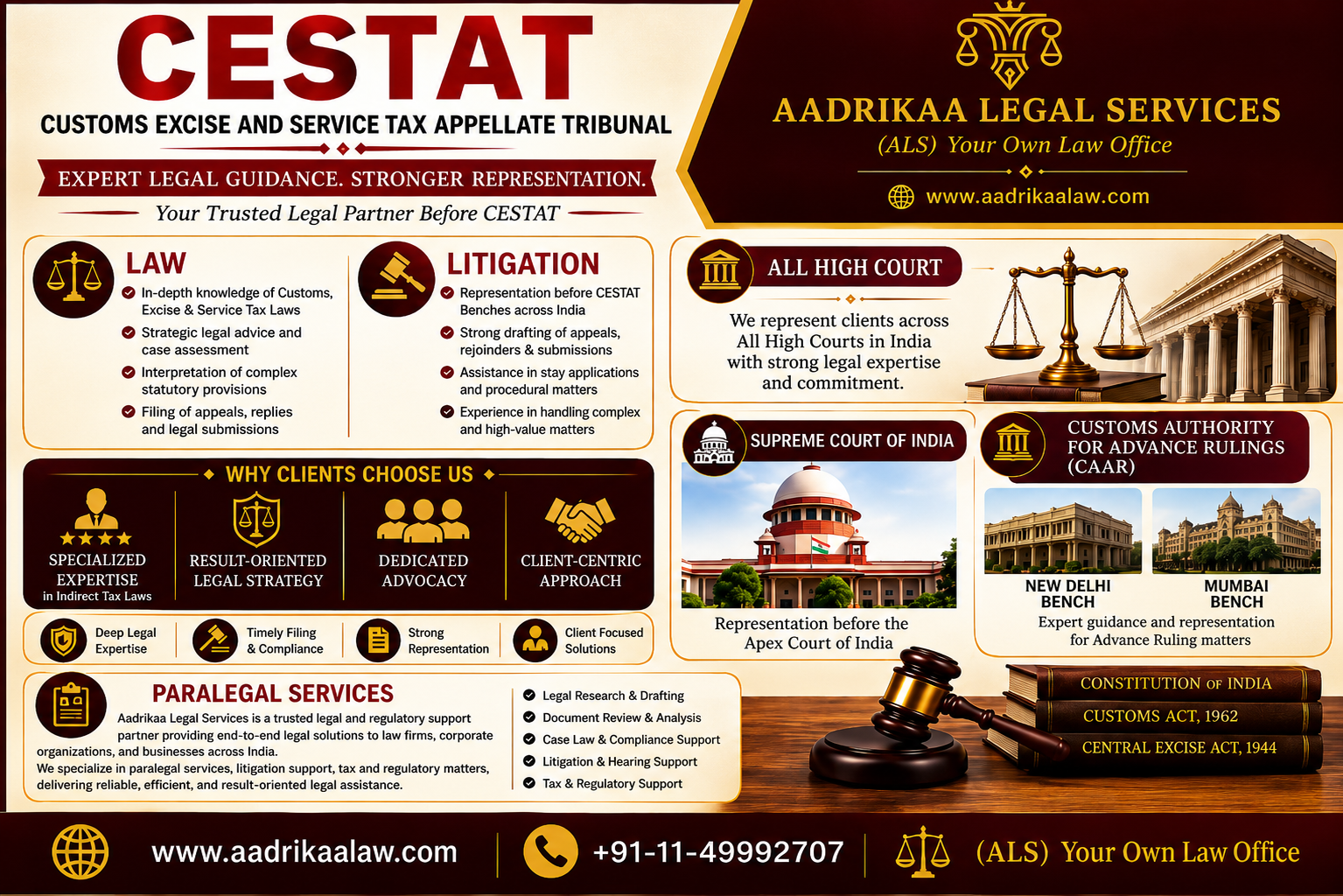
    Aadrikaa Legal Services is a trusted legal and regulatory support partner providing end-to-end legal solutions to law firms, corporate organizations, and businesses across India. We specialize in paralegal services, litigation support, tax and regulatory matters, delivering reliable, efficient, and result-oriented legal assistance.

    Our services include comprehensive paralegal support, drafting and documentation, legal research, case management, litigation handling, and representation support across various judicial and quasi-judicial forums. We also assist in direct and indirect tax matters, customs, GST, corporate regulatory compliance, and legal advisory.

    Handy Download:

    Ravi Shekhar Jha – Advocate, Bar Council of Delhi

  • Suspension of Sentence Granted to NDPS Convict Pending Appeal: High Court of Gujarat Allows Bail Citing Procedural Lapses and Delay in Hearing

    Suspension of Sentence Granted to NDPS Convict Pending Appeal: High Court of Gujarat Allows Bail Citing Procedural Lapses and Delay in Hearing

    Date: 29.08.2026

    In a significant development, the High Court of Gujarat at Ahmedabad granted suspension of sentence to Pravinkumar Balvantram Vana (Bishnoi), who was convicted under Sections 8(c), 22(c), and 29 of the Narcotic Drugs and Psychotropic Substances (NDPS) Act. The conviction, delivered by the Special (NDPS) Judge & 10th Additional Sessions Judge, Surat, sentenced the applicant to 10 years of rigorous imprisonment and a fine of Rs. 1,00,000, with an additional year of imprisonment in case of default in payment.

    Grounds for Suspension of Sentence

    The applicant, through his legal counsel, sought suspension of sentence on several grounds:

    1. Substantial Sentence Already Served: The applicant had already undergone over 3 years and 4 months of incarceration out of the total 10-year sentence.
    2. Delay in Appeal Hearing: The criminal appeal was admitted recently, and there were remote chances of it being heard in the near future.
    3. Compliance with Legal Provisions: The defense argued that the mandatory provisions of Section 50 of the NDPS Act were not properly complied with during the investigation.
    4. Willingness to Pay Fine: The applicant expressed readiness to deposit the fine imposed by the trial court.

    Arguments Presented

    • For the Applicant: The defense emphasized the fixed-term nature of the sentence, the significant portion already served, and the lack of compliance with mandatory legal procedures. Reliance was placed on Supreme Court judgments advocating liberal consideration for suspension of sentence in fixed-term cases, especially when appeals are unlikely to be heard soon.
    • For the State: The prosecution opposed the application, citing the seriousness of the offense and the evidence establishing the applicant’s complicity. The State argued that the trial court had properly appreciated both ocular and documentary evidence before convicting the applicant.

    Court’s Observations and Reasoning

    The Court carefully reviewed the evidence and legal precedents, noting:

    • The incident occurred in 2021, and the applicant had already served a significant portion of the sentence.
    • There was a prima facie violation of Section 50 of the NDPS Act, which mandates certain procedural safeguards during search and seizure.
    • Supreme Court judgments (including Bhagwan Rama Shinde Gosai v. State of Gujarat and others) support the suspension of sentence in cases where the appeal is unlikely to be heard before the sentence is completed.
    • The applicant had no antecedents and had already undergone more than 40% of the sentence.

    Court’s Decision

    Based on the above, the Court ruled in favor of the applicant, suspending the sentence pending the final hearing of the appeal. The applicant was ordered to be released on bail upon furnishing a bond of Rs. 15,000 with one surety of the like amount, subject to several conditions:

    1. Not to misuse liberty or leave Gujarat without court permission.
    2. To provide and not change residential address without permission.
    3. To cooperate with the appeal process and mark monthly presence at the local police station.
    4. To deposit the fine within four weeks.

    Significance of the Ruling

    This judgment underscores the judiciary’s approach to balancing the rights of convicts with the practical realities of delayed appellate hearings. It reiterates the principle that fixed-term convicts should not be unduly deprived of their liberty due to systemic delays, provided there are no exceptional circumstances or statutory bars.

    The case also highlights the importance of strict compliance with procedural safeguards under the NDPS Act, as lapses can significantly impact the outcome of post-conviction relief applications.

    This decision serves as a reference point for similar cases where convicts seek suspension of sentence during the pendency of their appeals, especially in the context of lengthy sentences and delayed hearings.

    Aadrikaa Legal Services is a trusted legal and regulatory support partner providing end-to-end legal solutions to law firms, corporate organizations, and businesses across India. We specialize in paralegal services, litigation support, tax and regulatory matters, delivering reliable, efficient, and result-oriented legal assistance.

    Our services include comprehensive paralegal support, drafting and documentation, legal research, case management, litigation handling, and representation support across various judicial and quasi-judicial forums. We also assist in direct and indirect tax matters, customs, GST, corporate regulatory compliance, and legal advisory.

    Handy Download:

    Ravi Shekhar Jha – Advocate, Bar Council of Delhi

  • CESTAT Chandigarh Clarifies Classification of Aluminum Profiles for Solar Panel Manufacturing

    CESTAT Chandigarh Clarifies Classification of Aluminum Profiles for Solar Panel Manufacturing

    Date: 29.08.2026

    Saatvik Green Energy Limited, a leading manufacturer of solar photovoltaic modules, recently secured a significant victory before the Customs, Excise and Service Tax Appellate Tribunal (CESTAT) Chandigarh. The case revolved around the customs classification and duty assessment of imported aluminum profiles used in solar panel manufacturingβ€”a dispute with far-reaching implications for the renewable energy sector and importers of industrial components.

    Background: The Dispute Over Aluminum Profiles

    Saatvik Green Energy imported β€œAluminum Hollow Profiles” for use in manufacturing solar PV modules. These were declared under Customs Tariff Item (CTI) 76042100, which covers aluminum bars, rods, and profiles of aluminum alloys (hollow profiles). However, the commercial invoices described the goods as β€œAluminum Solar Frame.” Saatvik claimed that these profiles underwent substantial processing before being incorporated into finished solar modules.

    The Customs Department, after an audit, argued that the goods should be classified under CTH 76169990 (other articles of aluminum), not as hollow profiles. This reclassification would attract a higher basic customs duty (BCD) and deny the benefit of concessional duty under Notification No. 24/2005-Cus. The department issued a show cause notice demanding differential duty of nearly Rs. 6 crore, along with interest, penalties, and a hefty redemption fine.

    Key Legal Issues Examined

    The Tribunal considered several critical questions:

    1. Correct Classification: Should the imported goods be classified as hollow profiles (CTI 76042100) or as finished aluminum frames (CTH 76169990)?
    2. Eligibility for Duty Exemption: Was Saatvik entitled to the concessional duty benefit under Notification No. 24/2005-Cus for goods used in manufacturing solar PV modules?
    3. Applicability of Extended Limitation Period: Could the department invoke the extended period for demanding duty in a bona fide classification dispute?
    4. Sustainability of Penalties and Fines: Were confiscation, redemption fine, and penalties justified?

    Tribunal’s Analysis and Findings

    1. Classification Must Reflect Goods as Imported

    The Tribunal emphasized that classification should be based on the goods’ objective characteristics at the time of importβ€”not their intended use or commercial description. The mere labeling of goods as β€œAluminum Solar Frame” in invoices was not conclusive. The Tribunal found:

    • The imported profiles, though cut to size, retained the essential character of hollow profiles.
    • Cutting profiles to shorter lengths is a standard industry practice and does not transform them into finished articles.
    • There was no evidence that the goods had become complete frames or articles of aluminum at the time of import.

    2. Specific vs. Residual Tariff Headings

    The Tribunal reiterated that a specific tariff heading (CTI 76042100 for profiles) prevails over a residual heading (CTH 76169990 for other articles of aluminum). Since the goods fit the definition of profiles, they could not be classified under the more general heading.

    3. Eligibility for Duty Exemption

    Saatvik had followed all procedural requirements for concessional duty, including providing end-use certificates. The Tribunal held that the exemption under Notification No. 24/2005-Cus was available for goods used in manufacturing solar PV modules, regardless of their precise classification within Chapter 76, as long as the end-use condition was satisfied.

    4. No Grounds for Penalties or Extended Limitation

    The Tribunal found no evidence of willful misstatement, suppression, or fraud. The dispute was purely interpretational. Therefore, extended limitation, penalties, and redemption fines were not sustainable.

    Final Order and Impact

    The CESTAT set aside the Commissioner’s order, holding:

    • The goods are classifiable under CTI 76042100 (aluminum hollow profiles).
    • Saatvik is eligible for the concessional duty benefit for imports made before 1 April 2022 (when the notification was amended).
    • All penalties, fines, and demands were quashed.

    This ruling provides clarity for importers of industrial components, especially in the renewable energy sector, reinforcing the principle that classification must be based on the goods’ condition at importβ€”not on commercial labels or intended use. It also underscores the importance of following procedural requirements to avail duty exemptions.

    Aadrikaa Legal Services is a trusted legal and regulatory support partner providing end-to-end legal solutions to law firms, corporate organizations, and businesses across India. We specialize in paralegal services, litigation support, tax and regulatory matters, delivering reliable, efficient, and result-oriented legal assistance.

    Our services include comprehensive paralegal support, drafting and documentation, legal research, case management, litigation handling, and representation support across various judicial and quasi-judicial forums. We also assist in direct and indirect tax matters, customs, GST, corporate regulatory compliance, and legal advisory.

    Handy Download:

    Ravi Shekhar Jha – Advocate, Bar Council of Delhi

  • Supreme Court Affirms Acquittal Under Sections 8/18(B) and 29 of the Narcotic Drugs and Psychotropic Substances Act, 1985

    Supreme Court Affirms Acquittal Under Sections 8/18(B) and 29 of the Narcotic Drugs and Psychotropic Substances Act, 1985

    Date: 27.08.2026

    The Supreme Court of India, in a significant judgment, upheld the acquittal of Jarooparam, who was charged under the Narcotic Drugs and Psychotropic Substances Act, 1985 (NDPS Act). This article provides a comprehensive overview of the case, the legal issues involved, and the reasoning behind the Court’s decision.

    Background of the Case

    On May 11, 2004, law enforcement authorities intercepted Jarooparam and two others at Bhilkhanda Square, seizing 7.2 kg of opium from their possession. The authorities prepared two samples of 30 grams each from the seized material and marked them for evidence. Jarooparam was arrested, and a complaint was filed under Sections 8/18 and 29 of the NDPS Act. The trial court convicted him, sentencing him to ten years of rigorous imprisonment and a fine of Rs. 1,00,000.

    High Court Proceedings

    Jarooparam appealed to the High Court of Madhya Pradesh, which acquitted him. The High Court found several procedural lapses:

    1. Improper Disposal of Seized Property: The bulk quantity of opium was not disposed of by the Executive Magistrate as required by law. Instead, after sampling, the remaining contraband was returned to the investigating officer without proper judicial authorization or documentation.
    2. Doubtful Evidence Handling: The prosecution failed to produce the bulk quantity of opium during the trial, raising doubts about the authenticity of the samples presented as evidence.
    3. Questionable Confessional Statement: The accused’s confession under Section 67 of the NDPS Act was recorded while he was in police custody, and there were allegations that his signature was obtained on blank papers. The High Court found this confession unreliable.
    4. Hostile Witnesses: Independent witnesses presented by the prosecution turned hostile, further weakening the case.

    Supreme Court’s Analysis and Judgment

    The Union of India appealed the High Court’s acquittal to the Supreme Court. After reviewing the case, the Supreme Court concurred with the High Court’s findings, emphasizing the following points:

    • Mandatory Compliance with Section 52A NDPS Act: The law requires that seized narcotics be disposed of only after a Magistrate’s order. In this case, there was no such order or application for disposal, and the prosecution failed to explain the fate of the bulk contraband.
    • Evidentiary Gaps: The absence of the bulk opium at trial and the lack of proper documentation undermined the prosecution’s case. The Court noted that the destruction or disposal of evidence must be properly authorized and documented to maintain the chain of custody and evidentiary value.
    • Unreliable Confession: The confession was not considered voluntary, as it was obtained while the accused was in custody and without proper safeguards.

    Final Outcome

    The Supreme Court dismissed the appeal by the Union of India, affirming the acquittal of Jarooparam. The Court highlighted the importance of strict procedural compliance in narcotics cases, given the severe penalties involved.

    Key Takeaways

    1. Strict Adherence to Procedure: Law enforcement must strictly follow procedures for seizure, sampling, and disposal of narcotics to ensure the integrity of evidence.
    2. Judicial Oversight: Disposal or destruction of seized contraband must be authorized by a competent court, with proper documentation and notice to the accused.
    3. Voluntariness of Confession: Confessions obtained in custody without safeguards are likely to be disregarded by courts.
    4. Role of Independent Witnesses: Hostile or unreliable witnesses can significantly weaken the prosecution’s case.

    This judgment serves as a reminder of the critical role of due process and evidentiary safeguards in criminal prosecutions under the NDPS Act.

    Aadrikaa Legal Services is a trusted legal and regulatory support partner providing end-to-end legal solutions to law firms, corporate organizations, and businesses across India. We specialize in paralegal services, litigation support, tax and regulatory matters, delivering reliable, efficient, and result-oriented legal assistance.

    Our services include comprehensive paralegal support, drafting and documentation, legal research, case management, litigation handling, and representation support across various judicial and quasi-judicial forums. We also assist in direct and indirect tax matters, customs, GST, corporate regulatory compliance, and legal advisory.

    Handy Download:

    Ravi Shekhar Jha – Advocate, Bar Council of Delhi

  • Karnataka High Court Sets Aside Customs Ruling, Orders Fresh Review of Halton India’s Kitchen Exhaust Hood Classification

    Karnataka High Court Sets Aside Customs Ruling, Orders Fresh Review of Halton India’s Kitchen Exhaust Hood Classification

    Date: 27.08.2026

    In a significant development for importers and the ventilation industry, the High Court of Karnataka has set aside a customs ruling concerning the classification of kitchen exhaust hoods imported by Halton India Private Limited. The matter has been remitted back to the Customs Authority for Advance Rulings (CAAR) for reconsideration, giving the company a fresh opportunity to present its case.

    Background of the Case

    Halton India Private Limited, a company specializing in ventilation solutions, regularly imports kitchen exhaust hoods from its Malaysian manufacturing unit for use in commercial kitchens across India. These hoods are designed to capture and remove heat, smoke, grease, steam, and odors from kitchen environments.

    Historically, Halton India classified these imports under Customs Tariff Heading (CTH) 84148090 (“Other”), a residuary entry under Chapter 8414 of the Customs Tariff Act, 1975. Seeking a more precise classification, the company applied to the CAAR to reclassify its products under CTH 84145990 (“Others”), which specifically covers ventilating or recycling hoods incorporating a fan.

    The Dispute

    The central issue was whether the imported kitchen exhaust hoods contained fans, which would determine their correct tariff classification. Halton India asserted that their products did include fans, while the CAAR concluded otherwise, ruling that the products did not contain fans and thus did not qualify for the requested classification.

    A procedural error complicated the matter: Halton India attempted to submit additional supporting documents via email but inadvertently sent them to the wrong address. As a result, the CAAR did not consider these materials when making its decision, noting in its order that no additional submissions had been received.

    The Appeal to the High Court

    Halton India appealed the CAAR’s decision to the High Court of Karnataka under Section 28-KA of the Customs Act, 1962. The company argued that it should be given another opportunity to present its evidence, as the failure to submit the documents correctly was a bona fide mistake. The customs authorities, on the other hand, maintained that the CAAR had made a proper decision based on the materials available at the time.

    The High Court’s Judgment

    After hearing both parties, the High Court found that the CAAR’s decision was made without considering potentially crucial evidence. The Court emphasized the need for a factual determination on whether the kitchen exhaust hoods indeed contain fans, as this would directly impact their classification under the customs tariff.

    Key Directions from the Court:

    1. Order Set Aside: The High Court set aside the CAAR’s previous order dated 25 March 2026.
    2. Remand for Reconsideration: The matter was remitted back to the CAAR for fresh consideration.
    3. Opportunity to Submit Evidence: Halton India was granted 15 days to submit additional materials or evidence to the CAAR via the correct email address.
    4. Fresh Decision Required: The CAAR was directed to review the new submissions and pass an appropriate order in accordance with the law.

    Implications for Importers and Industry

    This judgment underscores the importance of procedural fairness and the opportunity for parties to present all relevant evidence in customs classification disputes. It also highlights the technical nuances involved in classifying imported goods, where the presence or absence of specific features (such as a fan in an exhaust hood) can significantly affect tariff treatment and associated duties.

    For importers and businesses, the case serves as a reminder to ensure accurate and timely submission of all supporting documentation in regulatory proceedings. For authorities, it reinforces the need to base decisions on a complete and properly submitted evidentiary record.

    The outcome of the reconsideration by the CAAR will determine the final classification and duty implications for Halton India’s kitchen exhaust hoods, potentially setting a precedent for similar cases in the future.

    Aadrikaa Legal Services is a trusted legal and regulatory support partner providing end-to-end legal solutions to law firms, corporate organizations, and businesses across India. We specialize in paralegal services, litigation support, tax and regulatory matters, delivering reliable, efficient, and result-oriented legal assistance.

    Our services include comprehensive paralegal support, drafting and documentation, legal research, case management, litigation handling, and representation support across various judicial and quasi-judicial forums. We also assist in direct and indirect tax matters, customs, GST, corporate regulatory compliance, and legal advisory.

    Handy Download:

    Ravi Shekhar Jha – Advocate, Bar Council of Delhi

  • Supreme Court Clarifies Electronic Evidence and Re-trial Principles in NDPS Act

    Supreme Court Clarifies Electronic Evidence and Re-trial Principles in NDPS Act

    Date: 26.08.2026

    This article provides a comprehensive overview and analysis of the Supreme Court of India’s judgment in the case of Kailas S/o Bajirao Pawar v. State of Maharashtra, a significant decision concerning the admissibility of electronic evidence and procedural safeguards in trials under the Narcotic Drugs and Psychotropic Substances Act, 1985 (NDPS Act).

    Background of the Case

    1. Incident and Charges
      • The appellant, Kailas, along with three others, was charged under Section 8(c) read with Section 20(b)(ii)(C) of the NDPS Act for possession and sale of Ganja.
      • The prosecution’s case was based on a raid following a tip-off, resulting in the seizure of 39 kg of Ganja from a hut and 107.9 kg from another location.
      • The raid and seizure were video-recorded, and several witnesses, including police officers, a photographer, and panch witnesses, were examined during the trial.
    2. Trial Court Proceedings
      • The Trial Court convicted Kailas and another accused, relying heavily on the video evidence and oral testimonies.
      • The video was played in court, and a certificate under Section 65B(4) of the Indian Evidence Act was provided by the photographer, fulfilling the legal requirements for electronic evidence.
    3. High Court Appeal and Order for Re-trial
      • The High Court set aside the conviction and ordered a re-trial, citing procedural lapses:
        • The video was not played during the deposition of each witness, nor was a transcript prepared.
        • The Chemical Examiner (CA) was not examined in court.
        • Representative samples and remnant samples were not produced during the trial.
      • The High Court held that these lapses prejudiced both the accused and the prosecution, necessitating a re-trial.

    Supreme Court’s Analysis and Ruling

    Key Legal Issues Considered

    1. Admissibility of Electronic Evidence
      • The Supreme Court clarified that once a certificate under Section 65B(4) is provided, electronic records like video recordings become admissible as evidence.
      • It is not mandatory for the video to be played during each witness’s deposition or for a transcript to be prepared, unless the facts of the case specifically require further explanation.
      • The video in this case was corroborative of oral evidence and was played in court in the presence of all parties.
    2. Examination of Chemical Examiner (CA)
      • Under Section 293 of the Code of Criminal Procedure (CrPC), the report of a government scientific expert is admissible without the expert’s oral testimony, unless the court specifically requires it.
      • The Supreme Court found no legal requirement for the CA to be examined in every NDPS case if the report is otherwise admissible and unchallenged.
    3. Production of Seized Contraband and Samples
      • The Court reviewed precedents and held that non-production of the entire seized contraband is not fatal if there is reliable evidence of seizure, proper sampling, and an unbroken chain of custody.
      • Documents such as inventories, FSL reports, and evidence of intact seals are crucial to establish the integrity of the process.
    4. When is a Re-trial Justified?
      • The Court reiterated that re-trials are exceptional and should only be ordered in cases of grave procedural irregularities that result in a miscarriage of justice.
      • Mere procedural lapses or dissatisfaction with the prosecution’s evidence do not justify a re-trial.
      • The appellate court has the power to take additional evidence under Section 391 CrPC if necessary.

    Supreme Court’s Decision

    • The Supreme Court set aside the High Court’s order for a re-trial, finding the reasons given to be misconceived and unsupported by law.
    • The appeals were restored to the High Court for fresh consideration on merits, with directions for expeditious disposal.
    • The appellant was allowed to remain on bail during the pendency of the appeal.

    Key Takeaways for Legal Practice

    1. Electronic Evidence: Proper certification under Section 65B(4) is sufficient for admissibility; playing the video for each witness or preparing a transcript is not a legal requirement unless the context demands.
    2. Expert Reports: Chemical Examiner’s reports are admissible under Section 293 CrPC without oral testimony unless specifically challenged.
    3. Handling of Contraband: Production of the entire seized material is not mandatory if the chain of custody and sampling are properly documented and proven.
    4. Re-trial Principles: Re-trials are reserved for exceptional cases involving grave procedural errors that cause real prejudice; appellate courts should use their powers to take additional evidence rather than order re-trials for curable defects.

    Conclusion

    The Supreme Court’s judgment in Kailas v. State of Maharashtra reinforces the importance of adhering to statutory procedures for evidence, clarifies the admissibility of electronic records, and sets a high threshold for ordering re-trials. This decision serves as a crucial guide for courts, prosecutors, and defense counsel in handling NDPS cases and electronic evidence in criminal trials.

    Aadrikaa Legal Services is a trusted legal and regulatory support partner providing end-to-end legal solutions to law firms, corporate organizations, and businesses across India. We specialize in paralegal services, litigation support, tax and regulatory matters, delivering reliable, efficient, and result-oriented legal assistance.

    Our services include comprehensive paralegal support, drafting and documentation, legal research, case management, litigation handling, and representation support across various judicial and quasi-judicial forums. We also assist in direct and indirect tax matters, customs, GST, corporate regulatory compliance, and legal advisory.

    Handy Download:

    Ravi Shekhar Jha – Advocate, Bar Council of Delhi

  • Supreme Court Quashes GST Show Cause Notice Against Tata Steel: Clarifies Limitation and Allegations of Suppression

    Supreme Court Quashes GST Show Cause Notice Against Tata Steel: Clarifies Limitation and Allegations of Suppression

    Date: 26.08.2026

    The Supreme Court of India has delivered a significant judgment in the case involving Tata Steel Limited and the Union of India, addressing the validity of a show cause notice (SCN) issued under the Goods and Services Tax (GST) law. This decision clarifies crucial aspects of limitation periods and the requirements for invoking extended limitation due to allegations of fraud or suppression.

    Background

    Tata Steel Limited received a show cause notice for the financial years 2018-2019 to 2020-2021, following audit objections regarding mismatches in input tax credit (ITC) and short payment of tax. The notice was issued under Section 74 of the Central GST Act, which allows for an extended five-year limitation period in cases involving fraud, willful misstatement, or suppression of facts. Tata Steel challenged the notice, arguing that there were no such allegations or foundational facts to justify invoking Section 74.

    Key Issues Examined

    1. Limitation Periods Under GST Law
      • Section 73 of the CGST Act provides a three-year limitation for issuing notices where there is no fraud or suppression, while Section 74 extends this to five years if such allegations exist.
      • The Court noted that due to COVID-19, the limitation period was further extended by judicial orders, pushing the deadlines for the relevant years to as late as February 28, 2025.
    2. Requirement of Foundational Facts for Extended Limitation
      • The Supreme Court emphasized that merely using terms like “suppression” or “fraud” in the notice is insufficient. The notice must contain specific foundational facts that demonstrate deliberate evasion or misrepresentation.
      • In Tata Steel’s case, the SCN only made bland statements without detailing any factual basis for the allegations.
    3. Procedural Lapses by the Department
      • The Court observed that the assessing officer had not independently satisfied himself regarding the audit objections before issuing the notice.
      • The SCN was initially kept in abeyance and later revived as a “protective measure,” a concept not recognized under the GST regime.

    Supreme Court’s Decision

    • The Court set aside both the show cause notice and the consequential order, holding that the Department failed to provide the necessary foundational facts to justify the extended limitation under Section 74.
    • However, the Court clarified that the Department still has time (until February 28, 2027) to issue a fresh notice with proper factual grounds, should it choose to do so.

    Implications

    This judgment reinforces the principle that tax authorities must strictly adhere to statutory requirements when invoking extended limitation periods. Notices must be based on clear, specific facts rather than generic allegations. The decision provides greater clarity and protection for taxpayers facing similar proceedings under GST law.

    Aadrikaa Legal Services is a trusted legal and regulatory support partner providing end-to-end legal solutions to law firms, corporate organizations, and businesses across India. We specialize in paralegal services, litigation support, tax and regulatory matters, delivering reliable, efficient, and result-oriented legal assistance.

    Our services include comprehensive paralegal support, drafting and documentation, legal research, case management, litigation handling, and representation support across various judicial and quasi-judicial forums. We also assist in direct and indirect tax matters, customs, GST, corporate regulatory compliance, and legal advisory.

    Handy Download:

    Ravi Shekhar Jha – Advocate, Bar Council of Delhi

  • CESTAT Mumbai Upholds Correct Classification of Imported Alcohol Ethoxylates under Heading 3824

    CESTAT Mumbai Upholds Correct Classification of Imported Alcohol Ethoxylates under Heading 3824

    Date: 26.08.2026

    The Customs, Excise & Service Tax Appellate Tribunal (CESTAT) Mumbai recently delivered a significant judgment in the case involving Godrej Industries Limited and the Commissioner of Customs (NS-I), Nhava Sheva. This article provides a comprehensive overview of the dispute, the legal arguments, and the Tribunal’s final decision, offering valuable insights for importers, legal professionals, and industry stakeholders.

    Background of the Case

    Godrej Industries Limited, a prominent manufacturer with operations in Gujarat and a registered office in Mumbai, imported chemical products such as Dehydol LS1 TH, Dehydol LS2 TH, and Lauryl Alcohol Ethoxylate 2 Mole from overseas suppliers. The company classified these goods under Customs Tariff Item (CTI) 3824 9090/3824 9990, claiming a 0% Basic Customs Duty (BCD) exemption as per Notification No. 46/2011-Customs.

    However, the Directorate of Revenue Intelligence (DRI) alleged misclassification, asserting that the correct classification should be under CTI 3402 1300, which attracts a 5% BCD. This led to investigations, chemical testing, and the issuance of Show Cause Notices (SCNs) proposing reclassification, duty demand, confiscation, and penalties.

    Key Legal Issues

    The Tribunal was tasked with determining:

    1. Whether Godrej Industries misdeclared the classification of imported goods and if the goods were liable for confiscation and penalties.
    2. Whether the original authority’s order to drop the proposals for reclassification, duty demand, and penalties was legally sustainable.

    Arguments Presented

    Revenue’s Stand

    • The Revenue argued that the imported goods met the definition of Organic Surface-Active Agents (OSAA) under Chapter 34 of the Customs Tariff, based on chemical test reports showing non-ionic nature and surface tension reduction.
    • It was contended that the importer failed in self-assessment, indicating malafide intent to evade duty.

    Godrej Industries’ Defense

    • The company maintained that the goods, while reducing surface tension, did not meet the water solubility requirement of Chapter Note 3(a) to Chapter 34, as test reports showed separation of insoluble matter.
    • They cited Supreme Court and High Court judgments emphasizing the primacy of statutory definitions over trade parlance and the exclusion of water-insoluble surfactants from Heading 34.02.
    • Godrej also argued that interest and penalties under certain sections of the Customs Act could not be applied to additional duties (CVD/IGST), referencing recent judicial precedents.

    Tribunal’s Analysis and Findings

    Classification Principles

    • The Tribunal reviewed the General Rules for Interpretation (GIR) of the Customs Tariff and relevant Chapter Notes.
    • It emphasized that classification must be based on statutory definitions and technical criteria, not trade usage.

    Technical Assessment

    • The imported products (Lauryl Alcohol Ethoxylates with 1 or 2 moles of ethylene oxide) were found to be non-ionic surfactants but did not fully dissolve in water, forming a translucent liquid with separation of insoluble matter.
    • As per Chapter Note 3(a) to Chapter 34, only products forming a transparent or translucent liquid or stable emulsion without separation of insoluble matter qualify as OSAA under Heading 34.02.
    • The Tribunal noted that water-insoluble surfactants are specifically excluded from Heading 34.02 and should be classified under Heading 38.24.

    International and Domestic References

    • The Tribunal considered HSN Explanatory Notes and correspondence from Singapore Customs, both supporting classification under Heading 3824.

    Final Decision

    • The Tribunal upheld the original order, confirming that the goods are correctly classifiable under CTI 3824 9090/3824 9990, not under CTI 3402 1300.
    • Consequently, the demand for additional customs duty, interest, and penalties was found unsustainable.
    • The Revenue’s appeal was dismissed, and Godrej Industries’ cross-objection was disposed of.

    Implications of the Ruling

    1. Clarity on Classification: The judgment reinforces the importance of statutory definitions and technical criteria in customs classification, especially for chemical imports.
    2. Precedent for Water-Insoluble Surfactants: Products not fully soluble in water, even if they reduce surface tension, are to be classified under Heading 3824, not 3402.
    3. Limitation on Penalties: The ruling limits the applicability of interest and penalties on additional duties, aligning with recent judicial trends.
    4. Guidance for Importers: Importers should ensure accurate classification based on chemical properties and statutory notes to avoid disputes and penalties.

    Conclusion

    The CESTAT Mumbai’s decision in the Godrej Industries case provides a detailed roadmap for the classification of chemical imports under Indian customs law. By upholding the primacy of statutory definitions and technical evidence, the Tribunal has set a clear precedent that will guide future disputes and compliance strategies in the chemical and allied industries.

    Aadrikaa Legal Services is a trusted legal and regulatory support partner providing end-to-end legal solutions to law firms, corporate organizations, and businesses across India. We specialize in paralegal services, litigation support, tax and regulatory matters, delivering reliable, efficient, and result-oriented legal assistance.

    Our services include comprehensive paralegal support, drafting and documentation, legal research, case management, litigation handling, and representation support across various judicial and quasi-judicial forums. We also assist in direct and indirect tax matters, customs, GST, corporate regulatory compliance, and legal advisory.

    Handy Download:

    Ravi Shekhar Jha – Advocate, Bar Council of Delhi

  • CESTAT Chennai Overturns Customs Duty Demand in Alleged Fraudulent Export

    CESTAT Chennai Overturns Customs Duty Demand in Alleged Fraudulent Export

    Date: 25.08.2026

    The case involving Chessman Impex Private Limited is a significant legal episode in Indian customs law, centering on allegations of fraudulent exports, misuse of duty-free import licenses, and the rigorous standards of evidence required for penal action. This article provides a detailed overview of the case, the legal arguments, the tribunal’s findings, and its broader implications for exporters and customs authorities.

    Background of the Case

    Chessman Impex Pvt. Ltd. was granted a DEEC (Duty Exemption Entitlement Certificate) license in August 2000, allowing duty-free import of 5,350 MTs of non-alloy re-rollable scrap cuttings. In return, the company was obligated to export 5,000 MTs of non-alloy steel bars and rods. The imported material was processed by a supporting manufacturer, Goyal Ispat Ltd., and the finished goods were exported to Bangladesh. In some instances, due to delays, the foreign buyer permitted the export of unprocessed raw material.

    The Allegations

    In 2002, the Directorate of Revenue Intelligence (DRI) began investigating Chessman Impex for allegedly diverting duty-free imported scrap into the domestic market and exporting maize instead of steel bars to Bangladesh. The authorities claimed this violated customs notifications and the conditions of the DEEC license. A Show Cause Notice was issued, demanding recovery of customs duty, interest, and penalties, and alleging fraudulent export practices.

    Parallel Criminal Investigation

    Simultaneously, the Central Bureau of Investigation (CBI) registered a criminal case on similar allegations. After a thorough investigation, the CBI concluded that the exports to Bangladesh had indeed occurred as declared, and the export proceeds were realized. The criminal court accepted the CBI’s closure report, finding no evidence of fraud.

    Adjudication and Appeals

    Despite the CBI’s findings, the Commissioner of Customs confirmed the demand for customs duty, interest, and penalties against Chessman Impex and associated parties. The company and co-noticees appealed to the Customs, Excise and Service Tax Appellate Tribunal (CESTAT), arguing that:

    1. The CBI’s closure report and the criminal court’s acceptance should have been given due weight.
    2. There was no independent evidence of diversion or fraudulent export.
    3. All export documentation, customs certifications, and realization of export proceeds supported their case.
    4. The adjudicating authority relied on retracted statements and went beyond the scope of the Show Cause Notice.

    Tribunal’s Analysis and Findings

    The Tribunal conducted a comprehensive review and found in favor of Chessman Impex, highlighting several key points:

    1. Weight of Criminal Proceedings

    • The CBI’s closure report, accepted by the criminal court, was based on the same facts and evidence as the customs proceedings. The Tribunal cited Supreme Court precedents, emphasizing that penal action cannot be sustained when criminal courts have acquitted the accused on identical facts.

    2. Lack of Corroborative Evidence

    • The Tribunal noted the absence of independent evidence proving diversion of imported material or export of maize. There was no cash trail, no evidence of domestic disposal, and no corroboration from buyers or transporters.

    3. Valid Export Documentation

    • Special permissions, customs and excise certifications, and the realization of export proceeds all supported the genuineness of the exports. The Export Obligation Discharge Certificate issued by the DGFT remained unchallenged.

    4. Unreliable Statements

    • The Tribunal found that the statements relied upon by the authorities were inconsistent, retracted, and uncorroborated. Legal principles require that such statements, especially when retracted, cannot form the sole basis for penal action.

    5. Procedural Lapses

    • The adjudicating authority was criticized for exceeding the scope of the Show Cause Notice and for not considering the defense’s evidence and arguments adequately.

    Final Order and Relief

    The Tribunal set aside the customs duty demand, interest, and penalties against Chessman Impex and all co-appellants. The order emphasized the necessity of reliable, corroborative evidence for penal action and reinforced the principle that mere suspicion or procedural irregularities cannot substitute for proof.

    Implications and Lessons

    This case underscores several important lessons for exporters, customs authorities, and legal practitioners:

    1. Importance of Documentation: Proper export documentation, customs certifications, and realization of export proceeds are critical defenses against allegations of misuse.
    2. Role of Criminal Proceedings: Findings of criminal courts and investigative agencies like the CBI carry significant weight in parallel departmental proceedings.
    3. Standard of Proof: Penal provisions under customs law require cogent, corroborative evidence; assumptions and retracted statements are insufficient.
    4. Procedural Fairness: Authorities must adhere strictly to the allegations in the Show Cause Notice and cannot introduce new grounds during adjudication.

    Conclusion

    The Chessman Impex case is a landmark in the interpretation of customs law, particularly regarding the evidentiary standards for penal action and the interplay between criminal and departmental proceedings. It serves as a cautionary tale for both exporters and regulators, highlighting the need for thorough investigation, procedural fairness, and reliance on concrete evidence.

    Aadrikaa Legal Services is a trusted legal and regulatory support partner providing end-to-end legal solutions to law firms, corporate organizations, and businesses across India. We specialize in paralegal services, litigation support, tax and regulatory matters, delivering reliable, efficient, and result-oriented legal assistance.

    Our services include comprehensive paralegal support, drafting and documentation, legal research, case management, litigation handling, and representation support across various judicial and quasi-judicial forums. We also assist in direct and indirect tax matters, customs, GST, corporate regulatory compliance, and legal advisory.

    Handy Download:

  • Classification of Imported Lead-Bearing Material

    Classification of Imported Lead-Bearing Material

    Date: 24.08.2026

    The Mittal Pigments case is a landmark legal dispute in India concerning the customs classification of imported lead-bearing materials. The case revolves around whether certain imports should be classified as “lead concentrate” (eligible for lower customs duty) or as “lead waste/scrap” (subject to higher duty and import restrictions). This article provides a comprehensive overview of the case, the arguments from both sides, the scientific and legal complexities, and the final outcome.

    Background

    Mittal Pigments Pvt. Ltd. and related companies imported lead-bearing materials, declaring them as “lead concentrate” under Customs Tariff Heading (CTH) 26070000. The customs authorities at Mundra Port, however, argued that these goods were actually “lead waste/scrap” derived from used lead-acid batteries, which should be classified under CTH 7802. This classification has significant implications for customs duty rates and import restrictions under Indian law.

    Key Issues in the Dispute

    1. Nature of Imported Goods: Were the goods genuinely lead concentrate (a mineral product) or waste/scrap from battery recycling?
    2. Applicable Customs Tariff Heading: Should the goods be classified under CTH 2607 (lead ores and concentrates) or CTH 7802 (lead waste and scrap)?
    3. Eligibility for Duty Exemption: If classified as concentrate, the goods would attract a concessional duty rate; if as scrap, a higher rate and import restrictions would apply.

    Scientific and Technical Evidence

    Laboratory Reports

    • Customs Laboratory, Kandla: Reported the goods as having characteristics of lead concentrate, with lead content around 65-69%.
    • Customs Laboratory, Nhava Sheva: Concluded the goods were not lead concentrate but had characteristics of used lead battery scrap.
    • Central Revenues Control Laboratory (CRCL), New Delhi: Provided conflicting reportsβ€”some indicated the goods resembled washed and dried electrode paste from batteries, while others described them as off-specification industrial products.

    Composition Analysis

    • The imported material was primarily a greyish-black powder, composed mainly of lead sulphate and lead oxide, with minor amounts of metallic lead, zinc, copper, iron, antimony, and arsenic.
    • The presence of lead sulphate was a key point of contention: the department argued this indicated battery scrap, while the importers cited scientific literature showing that lead sulphate (anglesite) is also a natural lead ore mineral.

    Documentary Evidence

    • Pre-Shipment Inspection Certificates (PSICs) and Export Documents: Often described the goods as “lead concentrate” but classified them under the HS code for lead scrap (7802) in foreign customs documents.
    • Country of Origin Certificates: Sometimes listed the goods as “lead waste/scrap.”

    Legal Arguments

    Importers’ Position

    • Scientific Consistency: Pointed to laboratory reports and literature (e.g., Kirk-Othmer Encyclopedia) showing that the chemical composition matched that of lead concentrate.
    • Common Parlance Test: Argued that in trade, the product is known as “lead concentrate.”
    • Burden of Proof: Asserted that the department failed to conclusively prove the goods were waste/scrap.
    • Precedent: Cited the Gravitas India Ltd. case, where similar goods were classified as lead concentrate.

    Department’s Position

    • True Nature of Goods: Emphasized that the goods were derived from battery scrap, not mined ore, and thus should be classified as waste/scrap.
    • Intentional Misdeclaration: Alleged that the importers misdeclared the goods to evade higher duties and import restrictions.
    • Reliance on Documentation: Pointed to PSICs, export documents, and statements from pre-shipment agencies and laboratory officials.

    Judicial Findings

    • The Tribunal noted conflicting laboratory reports and emphasized that scientific evidence should take precedence over nomenclature or documentary descriptions.
    • The majority of scientific reports leaned in favor of the importers, indicating the goods had the characteristics of lead concentrate.
    • The Tribunal also referenced the Gravitas India Ltd. case, which dealt with nearly identical facts and ruled in favor of classifying the goods as lead concentrate.
    • The Tribunal concluded that, in the absence of conclusive evidence to the contrary, the importers’ classification should stand.

    Outcome

    • The Tribunal set aside the customs authorities’ classification of the goods as lead waste/scrap under CTH 7802.
    • The imports were allowed to be classified as lead concentrate under CTH 2607, making them eligible for the concessional duty rate.
    • The appeals of Mittal Pigments and related parties were allowed, and penalties/confiscation orders were set aside.

    Broader Implications

    • Scientific Evidence Prevails: The case underscores the importance of scientific analysis in customs classification disputes.
    • Precedent for Similar Cases: The decision aligns with the Gravitas India Ltd. case, providing clarity for future disputes involving similar materials.
    • Trade and Regulatory Impact: The outcome affects importers of lead-bearing materials, customs authorities, and the secondary lead industry in India.

    Conclusion

    The Mittal Pigments case highlights the complexities of customs classification, especially when scientific, technical, and legal factors intersect. The Tribunal’s decision reinforces the principle that, in cases of doubt or conflicting evidence, the benefit should go to the importer, provided their classification is supported by credible scientific analysis.

    Aadrikaa Legal Services is a trusted legal and regulatory support partner providing end-to-end legal solutions to law firms, corporate organizations, and businesses across India. We specialize in paralegal services, litigation support, tax and regulatory matters, delivering reliable, efficient, and result-oriented legal assistance.

    Our services include comprehensive paralegal support, drafting and documentation, legal research, case management, litigation handling, and representation support across various judicial and quasi-judicial forums. We also assist in direct and indirect tax matters, customs, GST, corporate regulatory compliance, and legal advisory.

    Handy Download: